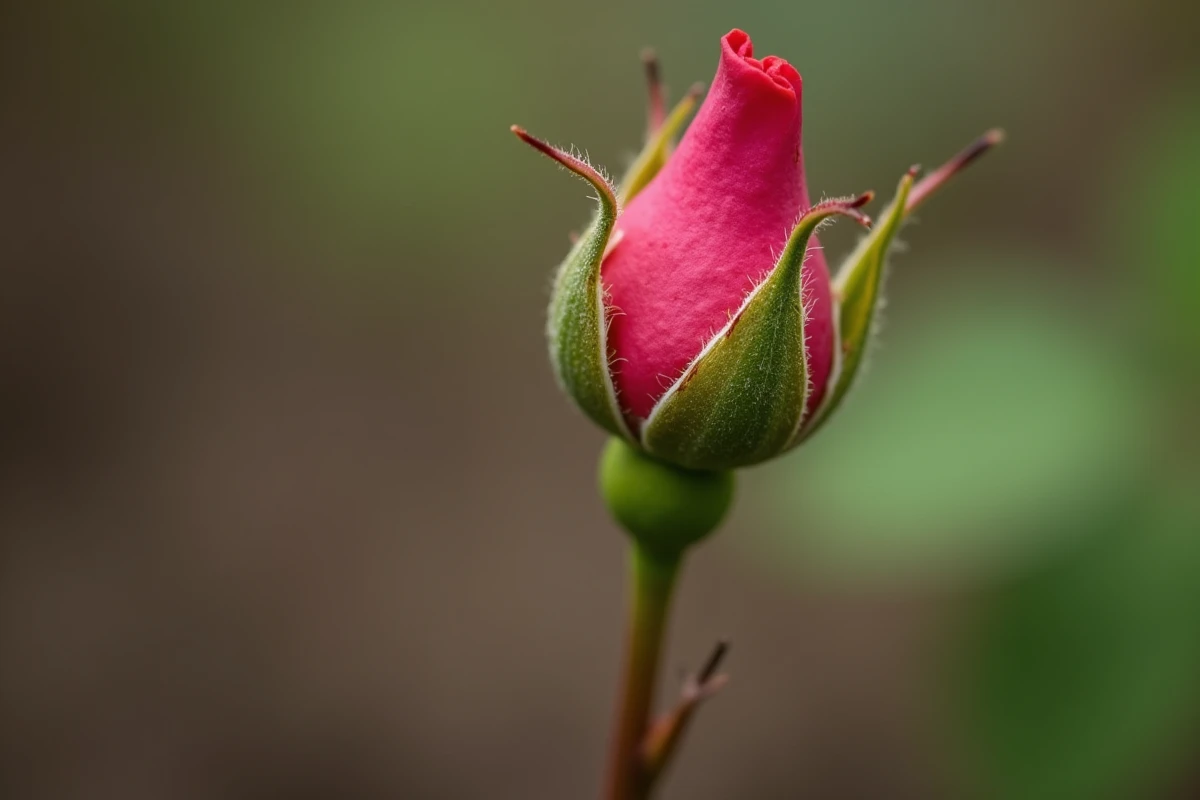
The rosebud refers to the bud located at the axil of a leaf, on a rose stem. It is from this bud that a new shoot develops, followed by a future bloom. Knowing how to identify it and understanding its function changes the way to prune, propagate, and care for a rosebush.
Orientation of buds after pruning: what recent trials modify
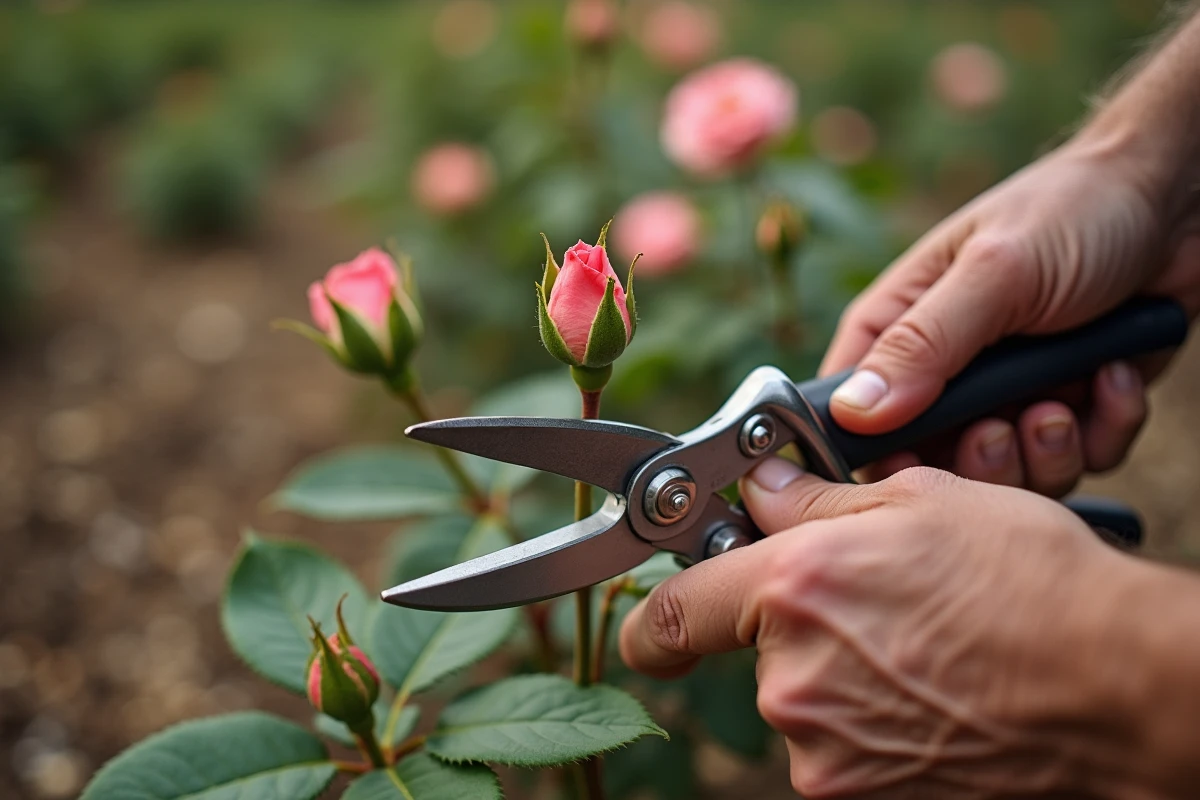
The classic recommendation is to prune above a bud facing outward from the bush, to aerate the branches and limit friction between them. This rule remains valid in most situations, but it is no longer sufficient to cover all scenarios.
Trials conducted by INRAE and ASTREDHOR in the Rhône Valley and in the Southwest, between 2021 and 2023, show that buds oriented north or northeast are more resistant to late frosts and episodes of early heat. Bud break is more consistent, and recovery after severe pruning is more reliable.
This information is particularly relevant for gardeners who grow remontant roses in warm or semi-continental climates. Rather than applying the sole rule of the bud facing outward, it becomes pertinent to learn everything about the rosebud to adapt the cutting angle according to the exposure of the bed and local conditions.
Dormant, active, and adventitious buds: recognizing what you are pruning
Not all buds on a rosebush play the same role. Confusing them can lead to unnecessary cuts or, worse, the removal of a bud that will bear the next wave of flowers.
The active bud
An active bud is swollen, slightly colored (often red or bright green depending on the variety). It is already in a growth phase or ready to break dormancy in spring. This is the one above which we prioritize pruning, as an active bud produces a vigorous shoot in just a few weeks.
The dormant bud
Located lower on the stem, sometimes barely visible under the bark, the dormant bud remains in reserve. It only activates if the plant undergoes stress (breakage, drastic pruning, frost). Old roses often have more dormant buds, which explains their ability to regrow from the base after a harsh winter.
The adventitious bud
More rare, the adventitious bud appears on old wood, where no bud was originally programmed. Its presence is a sign of the rosebush’s vitality, but it can also be a response to injury. Pruning just above a well-formed adventitious bud allows rejuvenation of a tired main branch.
- Active bud: swollen and colored, to be prioritized for spring pruning on remontant roses.
- Dormant bud: nearly invisible, serves as a reserve after severe frost or rejuvenation pruning.
- Adventitious bud: appears on old wood, useful for reviving a bare branch at the base.
Protection of buds at planting: a concrete issue in nurseries
French nurseries (Guillot, André Eve, among others) have noted a significant increase in disputes related to roses not resuming growth after planting since the 2020-2023 campaign. The most frequent cause is neither the soil nor the climate, but dried or damaged buds during transport and storage.
On a bare-root rose, the buds are exposed. A shock during handling, overly tight packaging, or prolonged storage in a heated area can compromise the start. Some companies have added pictograms to their packaging to indicate areas to protect, which public guides rarely mention.
Upon receiving a bare-root rose, two checks take less than a minute:
- Run your thumb over each visible bud: a viable bud is firm and slightly swollen, not dry or brown.
- Check for scratches or crushing on the first two or three buds above the grafting point.
If several buds are damaged, the planting cut should go lower to find a healthy bud, even if it means keeping only three buds per branch. It is better to make a short cut on intact buds than a high cut on compromised buds.
Modern varieties and selection based on bud quality
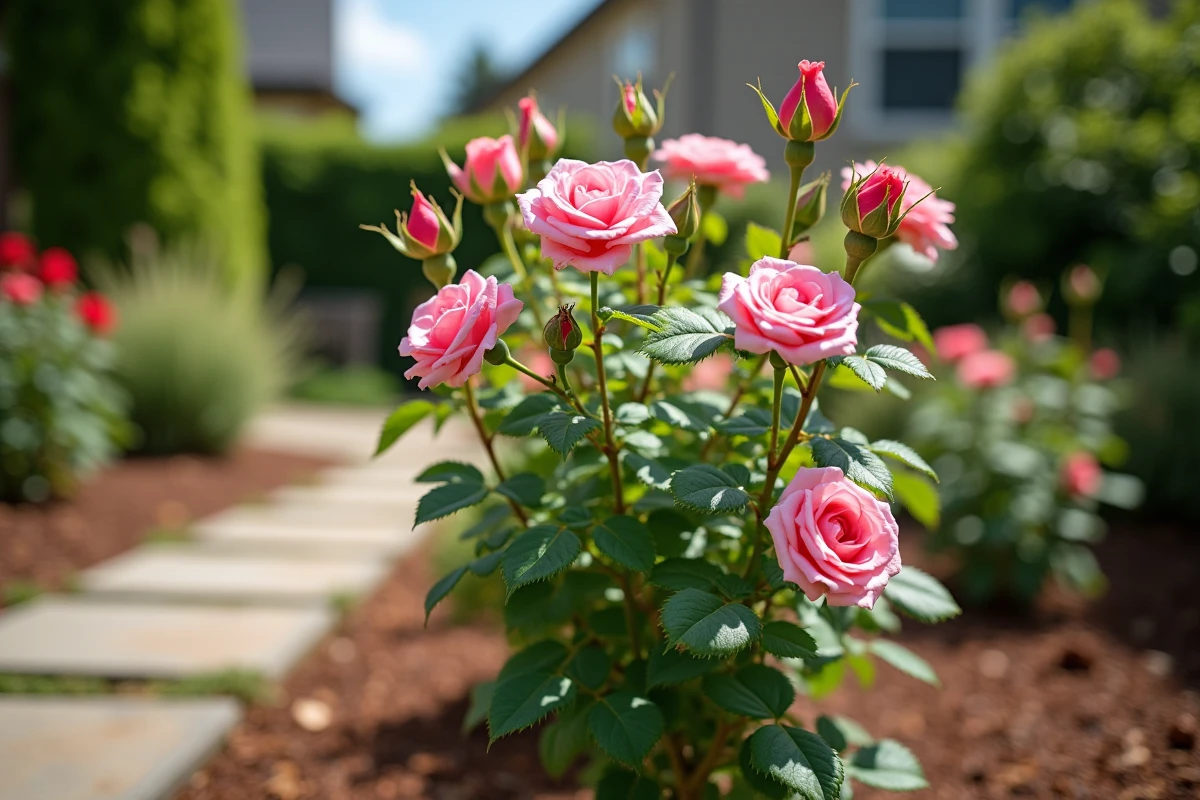
In recent years, breeders like Kordes, Meilland, and the ADR program in Germany have directed their selection towards roses with well-defined and contrasting buds on the stem. This criterion, once secondary, has become a performance indicator.
Varieties resulting from this selection show in practice better recovery after severe pruning and increased resistance to powdery mildew. For a beginner gardener, choosing a modern rose with visible buds makes the pruning action easier: the cutting point can be identified without hesitation, even on thin wood.
Old varieties retain their charm and fragrance, but their buds are often less distinct, smaller, and sometimes obscured by closely spaced thorns. Pruning then requires more attention and a well-sharpened pruner to avoid crushing the adjacent bud.
When to prune based on the condition of the buds in spring
The classic pruning calendar (March-April depending on the regions) does not take into account the actual state of the buds. A mild and early spring can cause buds to swell as early as February in coastal areas, while a late frost in April keeps them dormant at higher altitudes.
The most reliable indicator remains visual: prune when the buds on the upper third begin to turn pink or green. If the buds are still closed and brown, wait a few more days. If the shoots already exceed two centimeters, the pruning is late and cuts will need to be gentler to avoid wasting the energy already invested by the plant.
This observation reflex applies to both bush roses and climbers. On a climbing rose, the buds located on horizontal branches often break dormancy before those on vertical stems, which alters the order in which one intervenes.
The rosebud remains the best indicator of the physiological state of a shrub. Before following a fixed calendar, observing the color, size, and firmness of the buds on each plant guides pruning much more effectively than a date written in a planner.