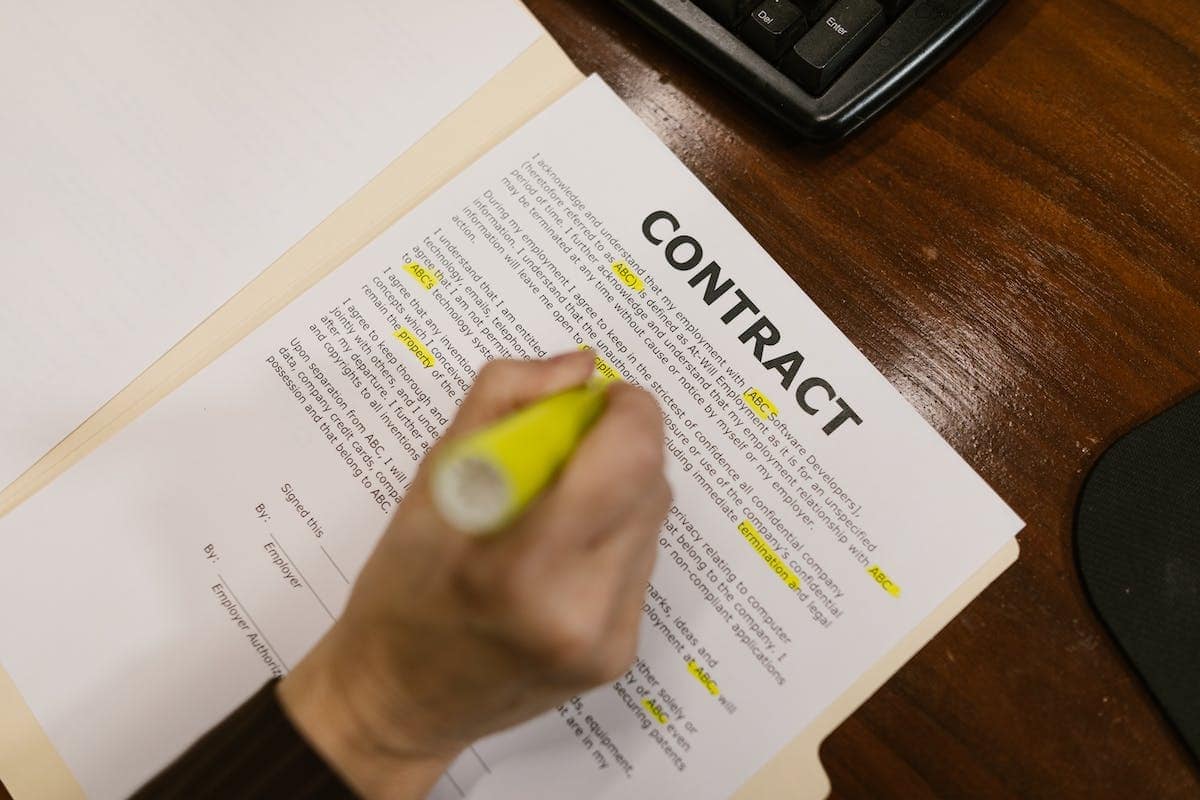
In the heart of the working world, fixed-term seasonal contracts (CDD) are common, especially in sectors such as tourism, hospitality, or agriculture. The termination of these contracts can sometimes be a legal puzzle. Whether it is an early termination, a normal end of contract, or a mutual termination, each situation requires a specific procedure. It is important to be well aware of their rights and obligations. In this context, we will explore the different ways to terminate a seasonal CDD contract.
Seasonal CDD Contract: Rules and Specificities
The characteristics of the seasonal CDD contract are crucial to understand when discussing the various procedures for terminating it. This type of contract is inherently time-limited, with a maximum duration defined by law and is often used to address peaks in activity or respond to temporary needs specific to certain times of the year.
It is important to remember that unlike a permanent contract (CDI), a CDD cannot be freely terminated before its scheduled end without a solid reason. Indeed, several legitimate reasons must be invoked to terminate a seasonal CDD early: transfer of the employee to a company located far from the initial place of hiring, serious misconduct committed by one of the contracting parties (employer or employee), force majeure, or medically recognized incapacity.
However, if these reasons cannot be invoked but there is still a desire either from the employer or the employee to terminate this contractual link, then the solution may lie in the resignation from a seasonal CDD. This specific modality has its own legislative rules that must be strictly followed to avoid any future disputes.
The process differs depending on whether this decision comes from the employer (dismissal) or from the employee who wishes to leave voluntarily (resignation). A precise understanding of the legal aspects regarding this issue is essential both to avoid any future disputes and to ensure a proper departure for the one leaving their position.

Early Termination of the Seasonal CDD: Reasons and Consequences
When it comes to terminating a seasonal CDD contract early, several reasons can be invoked. The transfer of the employee to a company located far from the initial place of hiring can constitute a legitimate reason for termination. Indeed, if the relocation makes it impossible to continue the contract under satisfactory conditions for the employer or the employee, it is possible to consider termination.
The serious misconduct committed by one of the contracting parties can also lead to an early termination of the contract. This may involve unacceptable behaviors such as theft or violence in the workplace. In these situations, resorting to this drastic decision is necessary.
Force majeure cases are also taken into account when it comes to terminating a seasonal CDD contract. Events beyond the control of the parties that prevent the normal execution of the contract can constitute a valid reason for ending the contractual link earlier than expected.
Ending the Seasonal CDD Contract: Procedures and Formalities
When the need arises to terminate a seasonal CDD contract, it is essential to follow certain procedures and formalities to avoid any disputes or disagreements between the parties. It is important to clearly express the intention to terminate the contract.
In this written notification, it is imperative to clearly state the reasons invoked to justify the early termination of the contract. It is advisable to be precise and detailed in the explanations to provide complete information to the other party.
Depending on the remaining duration of the contract, different steps must be followed. If the remaining contractual time is less than two weeks, the employee can notify their immediate departure while respecting a minimal notice period. On the other hand, if the remaining period exceeds two weeks, a longer notice period must be observed in accordance with the applicable legal provisions.
It should not be forgotten that any termination must be carried out in compliance with the fundamental rights of workers such as those relating to unfair dismissal. An abusive exercise of the right to terminate could not only lead to adverse legal consequences but also harm the professional image of the parties involved.
When the time comes to terminate the seasonal CDD contract, it is important to proceed with the administrative formalities required by law. Both the employer and the employee must carry out the necessary steps with the relevant bodies such as social security or labor inspection.
Ending a seasonal CDD contract requires a certain rigor and adherence to a set of formalities. It is important to notify in writing the intention to terminate while clearly explaining the reasons invoked. Additionally, attention must be paid to the required notice periods according to the remaining duration of the contract. Finally, one should not overlook the administrative obligations to avoid any future issues.
Consequences of Early Termination for the Employer and Employee
When a seasonal CDD contract is terminated early, it has consequences for both the employer and the employee. Initially, you lose your job before the scheduled end of the contract.
For the employee, an early termination can have negative financial implications. Indeed, they risk losing part of their remuneration if the notice period required by law is not respected. This situation can also jeopardize their rights regarding social security and unemployment insurance.
As for the employer, prematurely terminating a seasonal CDD contract also has significant consequences. It can create instability within the team and disrupt the smooth running of seasonal activities. This can lead to additional costs related to the search and training of a new collaborator to fill the vacant position.
In certain specific cases where the early termination would be considered abusive or unjustified by the competent courts, the employer could be ordered to pay a compensatory indemnity to the affected employee. This indemnity is intended to compensate for the damages caused by this sudden termination of the contract.
Alternatives to Early Termination of the Seasonal CDD
In light of the undesirable consequences of an early termination of a seasonal CDD contract, it is preferable to consider alternatives to avoid such situations. Here are some options to consider:
Professional retraining: If you realize that seasonal work does not align with your aspirations or if you wish to explore new opportunities, professional retraining can be an interesting alternative. You may consider pursuing a training program suited to your new professional project to develop the necessary skills.
Negotiation with the employer: Before making the drastic decision to terminate a seasonal CDD contract, it is advisable to engage in constructive discussion with your employer. Explain the reasons motivating your approach and propose alternative solutions such as a modification of hours or assigned tasks.
Resorting to a labor mediator: In the event of a persistent conflict with your employer, you can seek the intervention of a labor mediator to find a satisfactory compromise for all parties involved.
Exercising the right of withdrawal: In certain exceptional circumstances where your safety or that of others is at risk, you have the option to exercise your right of withdrawal, also provided for by the Labor Code.
Part-time adjustment: If the main reason motivating your desire to prematurely terminate a seasonal CDD contract is related to excessive workload, you can propose a part-time adjustment with your employer’s agreement. This solution would reduce the number of hours worked while preserving your job.
It is important to remember that each situation is unique and that the circumstances and potential consequences must be taken into account for all parties involved. Keeping this in mind, it becomes possible to find more balanced solutions rather than systematically resorting to the early termination of a seasonal CDD contract.
Managing the End of a Seasonal CDD: Recommendations and Anticipation
In the specific context of the end of a seasonal CDD contract, it is important to take certain measures to anticipate and manage this situation effectively. Here are some recommendations to follow:
• Anticipate the steps: be sure to prepare your contract by researching the professional opportunities available to you after the seasonal period. Look into sectors that are hiring, update your CV, and prepare personalized cover letters.
• Actively search for a new job: Not waiting until the last minute to look for new work is a wise strategy. Regularly check job offers, contact companies that may be interested in your skills, and be proactive in your search.
• Leverage your existing professional network by informing your contacts that you will soon be available for a new mission or a permanent position. Recommendations can play a key role in accessing new opportunities.
• Do not hesitate to make spontaneous applications to companies that align with your professional aspirations. Contact them directly to offer your services and show them how you can contribute to their success.
• Maintain a positive attitude: Even though the prospect of being unemployed may seem stressful, it is crucial to maintain a positive attitude throughout the process. This will help you stay motivated and approach job interviews with confidence.
• Before the official end of your contract, ensure that you fully understand the legal obligations regarding notice periods and final settlements. Also, prepare your administrative documents such as the work certificate, Pôle Emploi certificate, etc.
• Even after the end of your seasonal CDD contract, it can be beneficial to maintain professional relationships with your former colleagues or employers. These contacts can prove useful for obtaining recommendations or discovering other opportunities.
By following these recommendations, you will be better prepared to anticipate and manage the end of a seasonal CDD contract.