The French regulatory framework for the well-being of seniors has profoundly changed with the “Aging Well” law passed in 2024 and the national strategy “Aging Well 2024-2030” led by the Ministry of Solidarity and Families. These texts go beyond mere medical care: they integrate social participation, access to digital technology, mobility, and culture as essential components of quality of life after 60.
Inclusive housing and shared living assistance: the underutilized lever
Inclusive housing remains marginal in public discussions about senior well-being, even though it currently represents the most structured alternative between isolated homes and nursing homes. The principle: to group several elderly individuals in shared housing or a set of autonomous apartments, with common spaces and shared services (concierge, activities, integrated telemedicine).
The CNSA and the DGCS document a rapid increase in the number of supported projects since the establishment of shared living assistance. This assistance finances the “social and shared life project” carried by each housing unit, distinguishing it from traditional autonomy aids.
We observe that local authorities and social landlords carrying these projects face two recurring obstacles: the availability of land in town centers and coordination among funders (funders’ conferences, departments, ARS). Despite this, autonomous residences and intergenerational co-housing are multiplying. To delve deeper into this topic and identify suitable measures for each situation, the senior resources on Santé Radieuse compile updated information on these forms of housing and the associated aids.
Prevention of loss of autonomy: local coordination and concrete measures
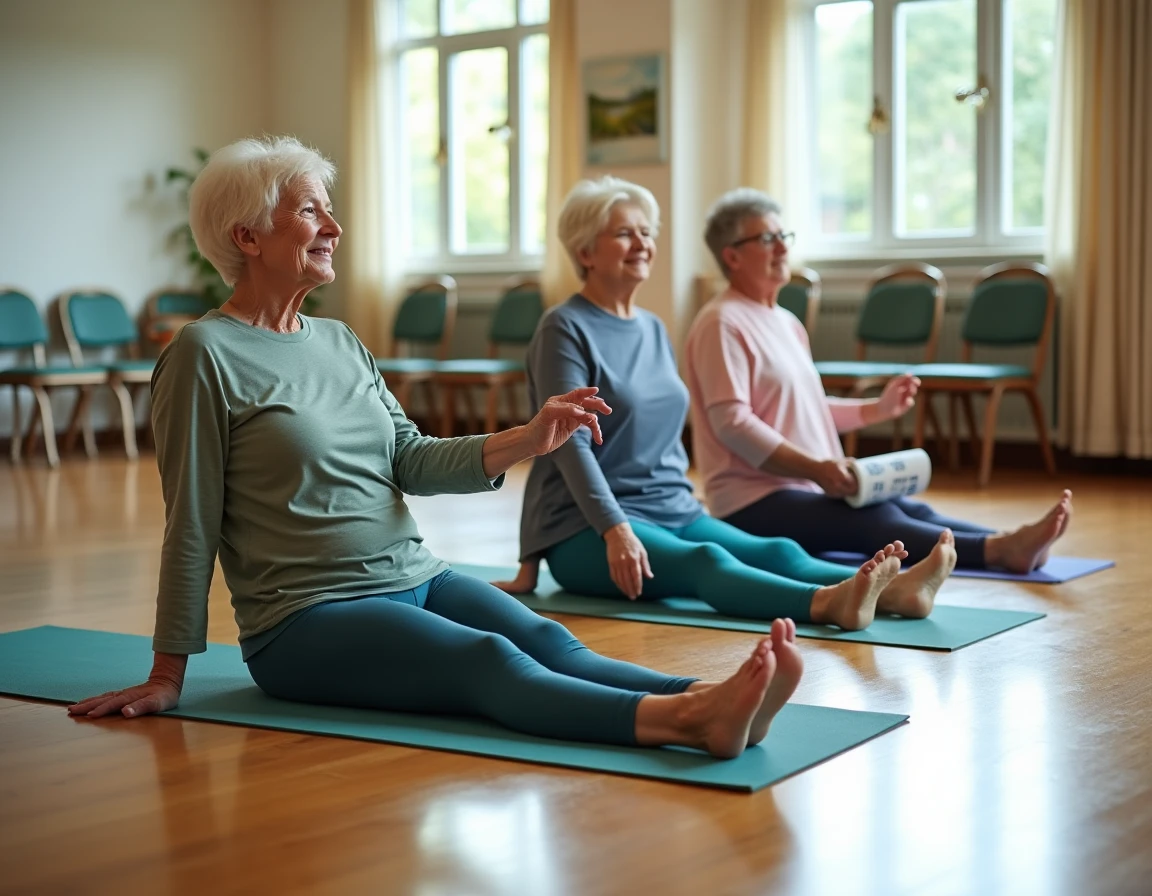
The “Aging Well 2024-2030” strategy strengthens the role of local actors in prevention. The CLIC (Local Information and Coordination Centers), MAIA systems, and funders’ conferences are the three operational links to know. Each operates on a different scale, but all share a common goal: to identify vulnerabilities before they become dependencies.
The “Aging Well” law emphasizes the adaptation of housing as a priority prevention axis. Specifically, this includes the installation of grab bars, the removal of thresholds, improving lighting, and implementing walk-in showers. These works fall under specific funding mechanisms (MaPrimeAdapt’, departmental aids), but their coordination remains complex for beneficiaries.
The funders’ conferences, led by the departments, coordinate prevention actions in a given territory. They finance collective workshops (balance, memory, nutrition) and individual actions. Their effectiveness largely depends on the quality of the local associative network.
Prevention activities: beyond gentle gymnastics
Labelled prevention programs go beyond just adapted physical activity. We recommend distinguishing three complementary areas:
- Fall prevention: balance and muscle strengthening workshops led by trained professionals (physiotherapists, specialized sports educators), with initial fall risk assessment
- Cognitive stimulation: structured programs for memory, reasoning, and attention, distinct from simple board games due to their calibrated progression and ongoing monitoring
- Prevention of social isolation: digital workshops, organized cultural outings, intergenerational co-housing, all these actions aim for a measurable objective of regular social contacts
Combating social isolation of seniors in France
Isolation is a documented factor of excess mortality among the elderly. The “Aging Well” law makes it a full intervention axis, on par with physical health or housing adaptation. This positioning marks a turning point: social connection shifts from being a “bonus” to a structural component of well-being.
Senior villages and intergenerational shared housing directly address this issue. The model relies on the pooling of services and proximity among residents, generating spontaneous daily interactions without solely depending on scheduled activities.
Digital technology plays an increasing role in maintaining social connections, but only if seniors are trained and equipped. Digital workshops funded by the funders’ conferences enable learning about video conferencing, messaging, and online administrative procedures. Without this support, the dematerialization of public services paradoxically exacerbates the isolation of those least digitally autonomous.
Home care and coordination of health professionals
Staying at home relies on a chain of providers whose coordination remains a weak point. Independent nurses, nursing assistants, home helpers, physiotherapists, primary care physicians: each intervenes according to their own schedule, often without a common information-sharing tool.
Telemedicine integrated into autonomous residences represents a concrete advancement. It allows for regular consultations without travel, remote monitoring of vital signs, and increased responsiveness in case of health deterioration. Inclusive housing projects that integrate telemedicine from their conception offer a level of health security comparable to that of a medicalized structure, while preserving the resident’s autonomy.
Home assistance services are becoming more professionalized, with training requirements strengthened by recent regulatory developments. The quality of service depends on verifiable criteria:
- Certification or labeling of the structure (Cap’Handéo, Qualicert or equivalent)
- Existence of a personalized intervention plan regularly revised
- Rate of supervision and oversight of home caregivers
- Continuity of the caregiver (limiting turnover to maintain the trust relationship)
The choice of a care or home assistance provider is not merely a question of price. The stability of the caregiving team and the ability to coordinate with the primary care physician weigh more heavily on daily quality of life than the number of hours of intervention.