
A whipped cream canister that refuses to dispense its cream while still appearing full presents a technical problem rather than a simple manufacturing defect. The blockage of a whipped cream canister results from precise physical mechanisms related to internal pressure, product temperature, or the composition of the cream itself. Understanding these mechanisms allows one to distinguish between a repairable failure and a product that is truly empty.
Gas-Cream Separation: The Mechanism That the Canister Cannot Tolerate
The operation of a whipped cream canister relies on a balance between the fatty phase (the cream) and the propellant gas dissolved within it. When this balance is disrupted, the gas separates from the cream and forms a distinct pocket. The result: the canister expels pure gas, and then nothing.
This phenomenon of gas-cream separation due to phase separation accelerates in several situations. A canister stored at room temperature loses the solubility of the gas in the fatty substance more quickly. A canister that is insufficiently shaken before use does not redistribute the gas evenly throughout the preparation.
The ECHA (European Chemicals Agency) noted in a 2022 report on food propellant gases that recent substitutions of gases, related to restrictions on high global warming potential gases, alter the solubility of the propellant in the cream. Some mixtures of nitrous oxide and CO₂ increase the risk of separation, which explains canisters that are still heavy but only dispense gas.
A detailed guide explains why a whipped cream canister may get blocked depending on the type of gas and the formulation of the cream.
Failure Diagnosis: Table of Common Causes of Blockage
Before throwing away a canister that seems defective, a quick diagnosis often helps locate the source of the problem. The table below ranks the causes by frequency, distinguishing those that are recoverable from those that are not.
| Cause | Observable Symptom | Recoverable |
|---|---|---|
| Temperature too high | Liquid cream or gas only at the outlet | Yes, refrigerate for at least 2 hours |
| Canister insufficiently shaken | Jet of gas without cream, then blockage | Yes, shake vigorously 8-10 times upside down |
| Nozzle clogged with dried cream | Nothing comes out despite pressure when touched | Yes, rinse the nozzle with warm water |
| Irreversible gas-cream separation | Canister heavy, but only gas comes out | No, the remaining cream will no longer be aerated |
| Empty or defective gas cartridge | No resistance when pressing, canister light | No, the propellant is exhausted |
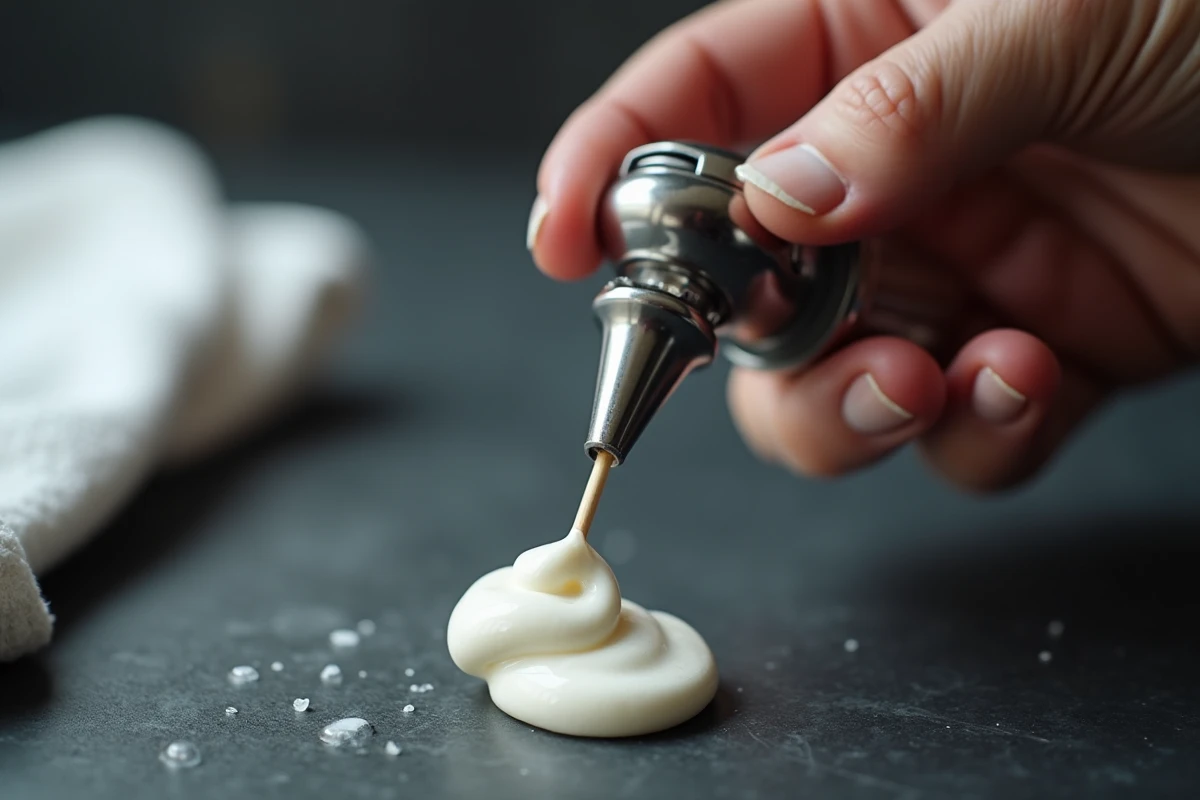
The first reflex when faced with a blocked canister is to shake it upside down and then check the cleanliness of the nozzle. These two actions resolve the majority of cases.
Lightened Formulations and Instability of Whipped Cream Foam
“Clean label” or light whipped cream canisters present a specific problem. By reducing stabilizers and emulsifiers, manufacturers achieve a shorter ingredient list, but the foam produced is significantly less stable over time.
Comparative tests published by UFC-Que Choisir (November 2023, report “Creams and Butters: The Match”) confirm that some canisters without additives have a stronger tendency to “spit gas” without cream at the end of use. The gaseous phase separates more quickly from the fatty phase when no emulsifier maintains the bond.
For the consumer, this means that a light canister has a shorter window of use after opening. Two precautions reduce the risk:
- Store the canister between 2 and 4 °C at all times, including between closely spaced uses
- Use the canister in the days following the first use, without waiting for the expiration date
- Shake longer than with a standard canister to redistribute the gas in the cream
Whipped Cream Siphon: Cartridge and Preparation Errors
The rechargeable siphon operates on the same physical principle but adds additional variables. The type of gas cartridge, the amount of cream introduced, and the fat content of the preparation directly influence the texture obtained.
A poorly pierced gas cartridge or a worn seal produces a silent leak: the pressure drops without the user noticing. When it comes time to serve, the siphon only delivers a trickle of liquid cream or nothing at all.
The most common preparation errors with a siphon include:
- Filling beyond the maximum fill line, which does not leave enough volume for gas expansion
- Using cream with too low a fat content (below 30%), which does not retain the propellant gas
- Screwing in the cartridge before properly closing the body of the siphon, which causes an immediate loss of pressure
- Neglecting to clean the seal and nozzle after each use, leading to gradual blockages
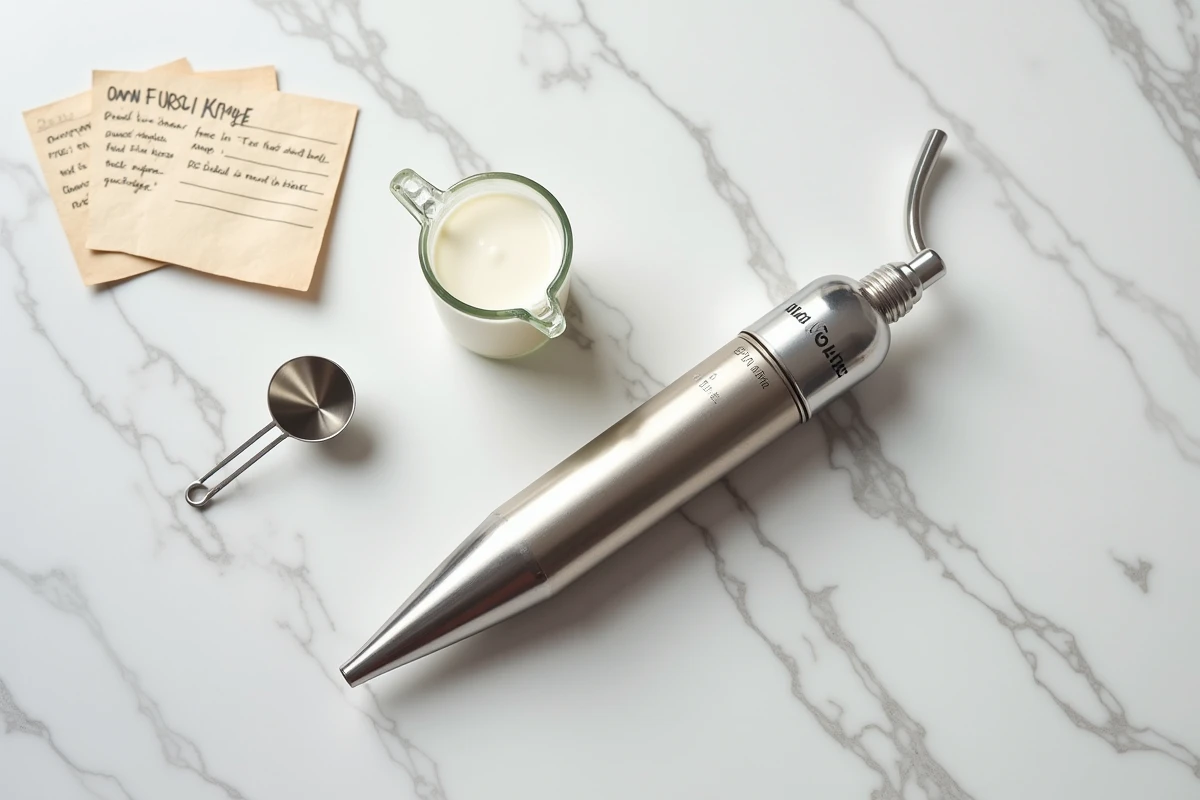
The siphon also requires a resting time in the refrigerator after loading. Two hours minimum in the cold allow the gas to dissolve in the cream, a necessary condition to achieve airy foam rather than a jet of liquid followed by a spit of gas.
Residual Pressure and Safety: Do Not Force a Blocked Canister
A whipped cream canister that no longer dispenses cream may still contain significant residual pressure. Attempting to pierce the container or force the valve mechanism poses a risk of projection. The internal pressure of a food aerosol can remain sufficient to cause injuries if the container is damaged.
The safest action when faced with a definitively blocked canister is to release its pressure by pressing the valve over a sink, then dispose of it at a collection point suitable for aerosols. No mechanical manipulation of the canister body is recommended.
The distinction between a temporary blockage (clogged nozzle, inappropriate temperature) and a permanent blockage (irreversible phase separation, exhausted gas) determines whether the remaining cream can still be used. In doubt, a simple test suffices: shake the canister upside down, clean the nozzle, refrigerate for two hours, then try again. If nothing changes after these steps, the contents are no longer usable in foam form.