
The Road Safety Certificate (BSR), now integrated into the level 2 school road safety certificate (ASSR2), is an essential key for young people wishing to ride mopeds or light vehicles from the age of 14. To obtain it, adolescents must go through several phases, starting with theoretical training on traffic rules and road risks. This preparation continues with a written test that assesses the knowledge acquired. Practical training, provided by an accredited driving school, allows them to practice driving on the road.
Understanding the road safety certificate and its stakes
The Road Safety Certificate (BSR), a specific category of driving license, allows young people from the age of 14 to take the handlebars of mopeds and to pilot light motor quadricycles. Validated by the Ministry of the Interior and the Directorate of Legal and Administrative Information, this certificate embodies a true commitment to road safety.
Candidates must demonstrate their ability to travel safely, assimilating essential rules and responsible behaviors. Service-public.fr proves to be a valuable tool, providing detailed information and allowing subscriptions to updates regarding the procedures for obtaining the BSR.
A common question arises: How much does the BSR cost? The answer varies depending on driving schools and regions, but it generally includes the cost of theoretical and practical training. Future drivers and their families should therefore inquire in advance with accredited establishments to establish a budget in line with this essential training.
The BSR represents not only a driving authorization but a true initiation to caution and respect on the road. Young drivers must thus integrate these principles from an early age, preparing the ground for safer and more conscious driving in the future.
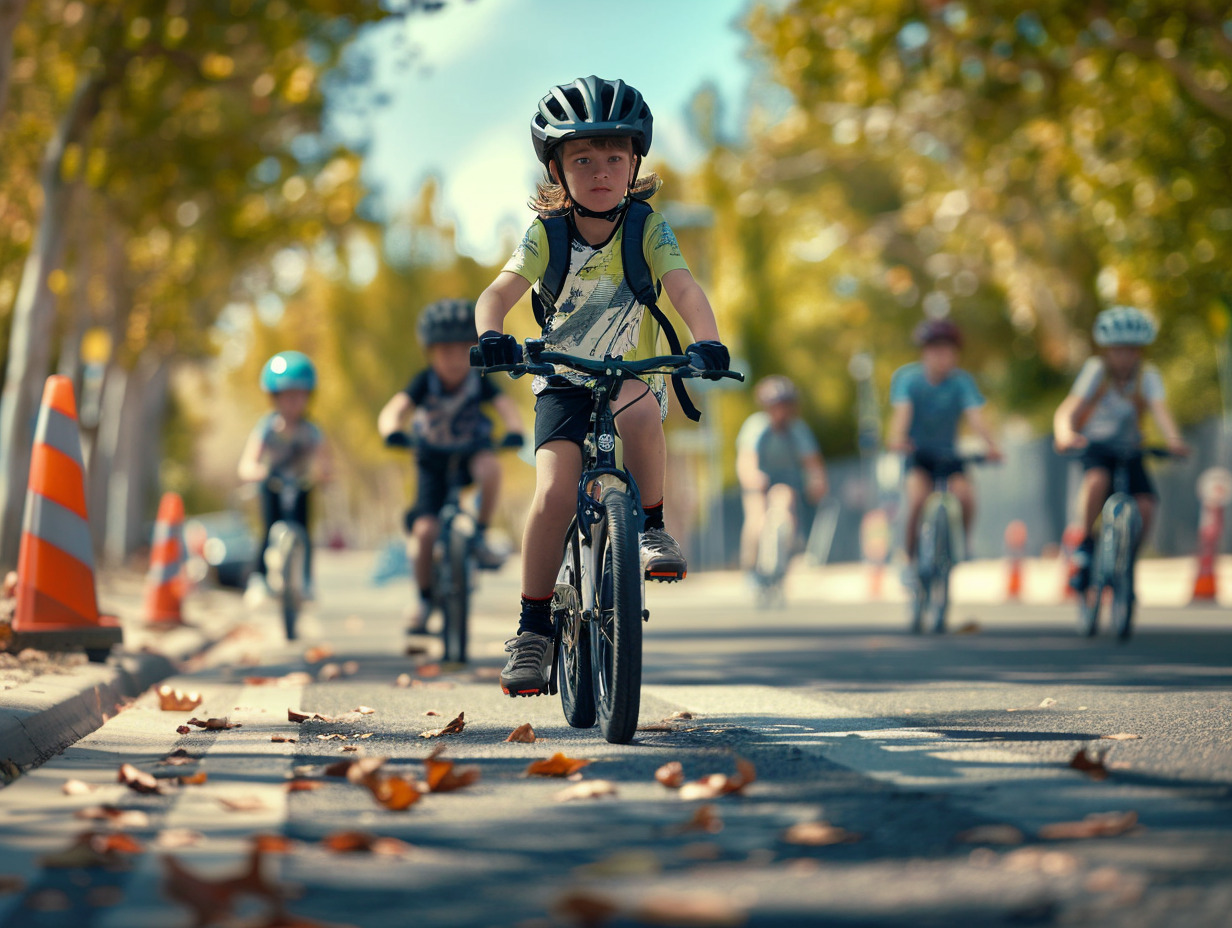
Key steps to obtain the road safety certificate
The first step towards obtaining the Road Safety Certificate consists of a theoretical training, a necessary passage that conditions access to driving. This training requires proof of knowledge, acquired through the School Road Safety Certificate (ASSR), of the first or second level, or through the Road Safety Certificate (ASR), for those who did not have the opportunity to take the ASSR in middle or high school. Mastery of the fundamental rules of the highway code and safety principles is thus verified.
Continuing their journey, candidates engage in practical training, provided by an accredited establishment. Driving schools or associative driving schools, these institutions offer progressive learning, starting with off-road driving to safely familiarize themselves with the vehicle controls. Then come the lessons on public roads, when learners apply theoretical concepts in real conditions, while deepening their awareness of road risks.
The National Agency for Secure Titles (ANTS), in its role of monitoring and guaranteeing the authenticity of titles, offers meticulous tracking of the progress of the BSR. This verification and validation process, conducted rigorously, ensures the integrity of the training and the reliability of the certificate issued.
The plurality of actors involved in this system, including ECF Asso, which offers dedicated training for the BSR, illustrates the collaboration between public and private structures to promote road safety. All these steps, methodically orchestrated, aim to prepare future drivers for responsible and conscious practice of road challenges.