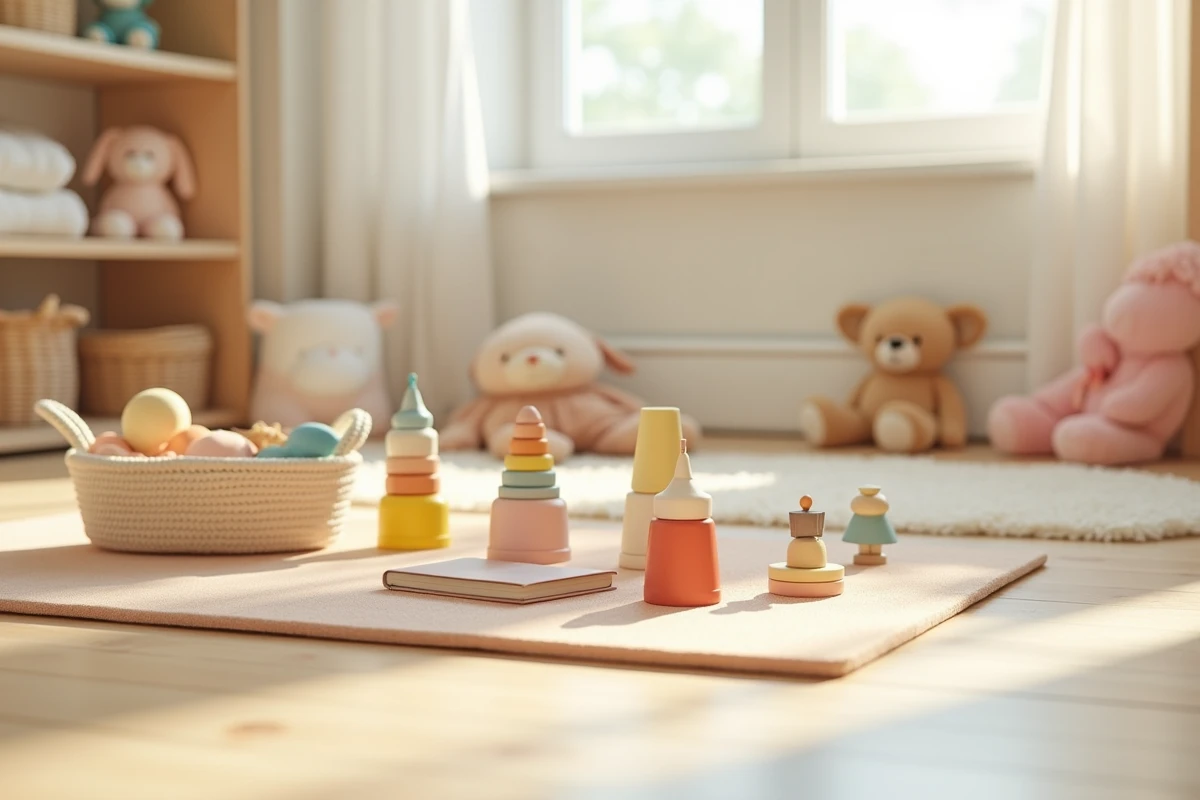
At 8 months, the baby generally masters sitting up and begins to coordinate their grasping gestures with a specific intention. Object permanence is developing, babbling is enriched with repeated syllables, and gross motor skills evolve towards crawling or creeping.
The playful activities proposed here each target a specific developmental skill, particularly based on the WHO guidelines published in 2023, which link early motor play to better motor behaviors and less sedentary time in early childhood.
1. The cushion course for active crawling
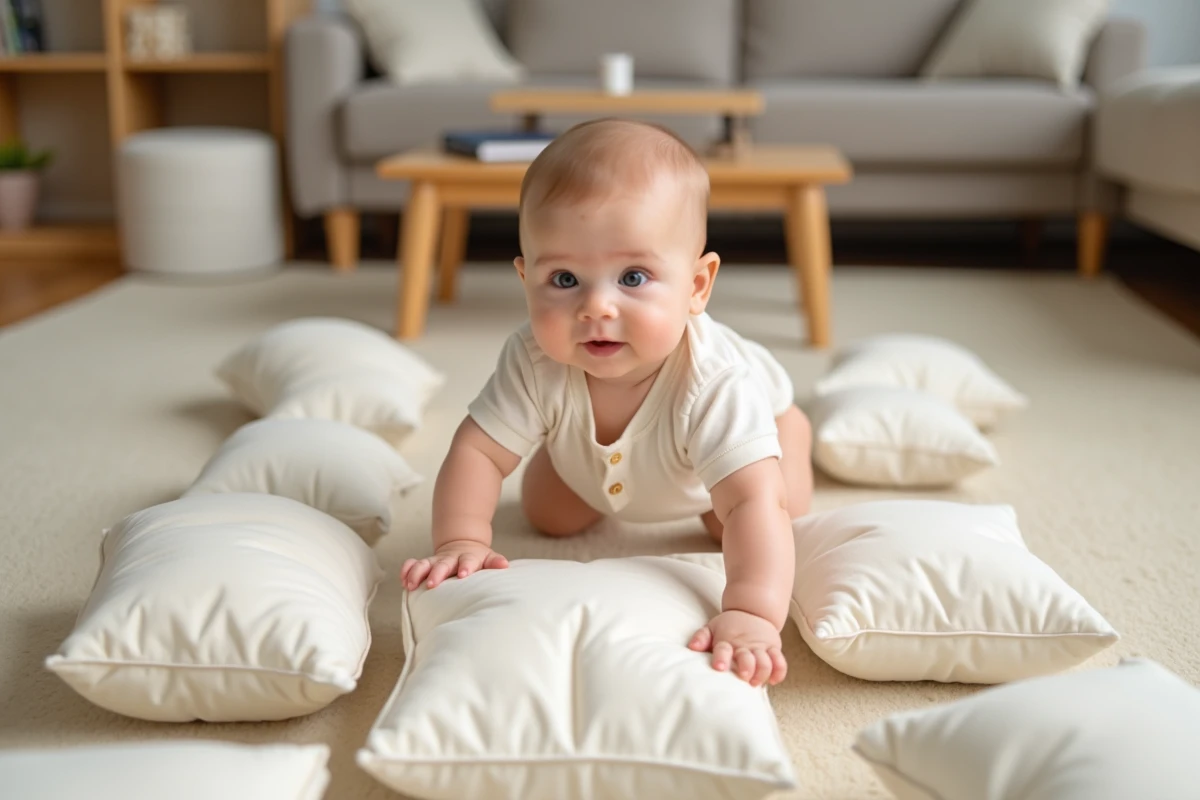
Arranging cushions of various sizes on the floor creates a motor course suitable for crawling that engages the muscle chains of the trunk and upper limbs. The baby must adjust their trajectory, negotiate a soft incline, and maintain lateral balance.
We recommend varying the density of the cushions (firm, soft) to enrich proprioceptive feedback. Placing a coveted object at the end of the course activates intentional motivation, an underestimated lever in passive motor activities like static play mats.
Find more suggestions for 8-month-old baby games on Imazine that detail variants of courses suitable for this age group.
2. The object permanence box
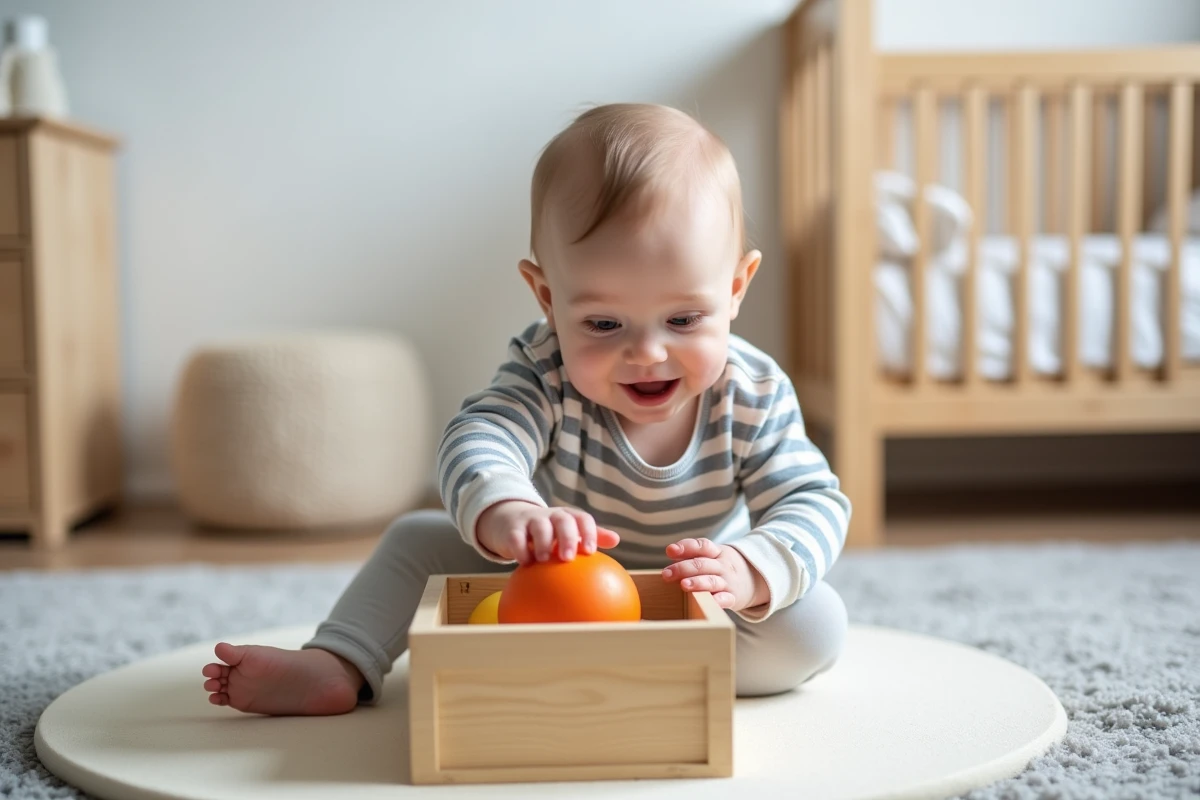
The permanence box (Montessori type) with a drawer or hole allows the baby to make a ball disappear and then find it again. This mechanism directly works on object permanence, a major cognitive acquisition between 7 and 10 months.
Favoring a wooden model with a single opening reduces attentional load. Too many traps or colors scatter joint attention at this age. The voluntary release gesture into the hole also promotes eye-hand coordination in precision situations.
3. The sensory treasure basket
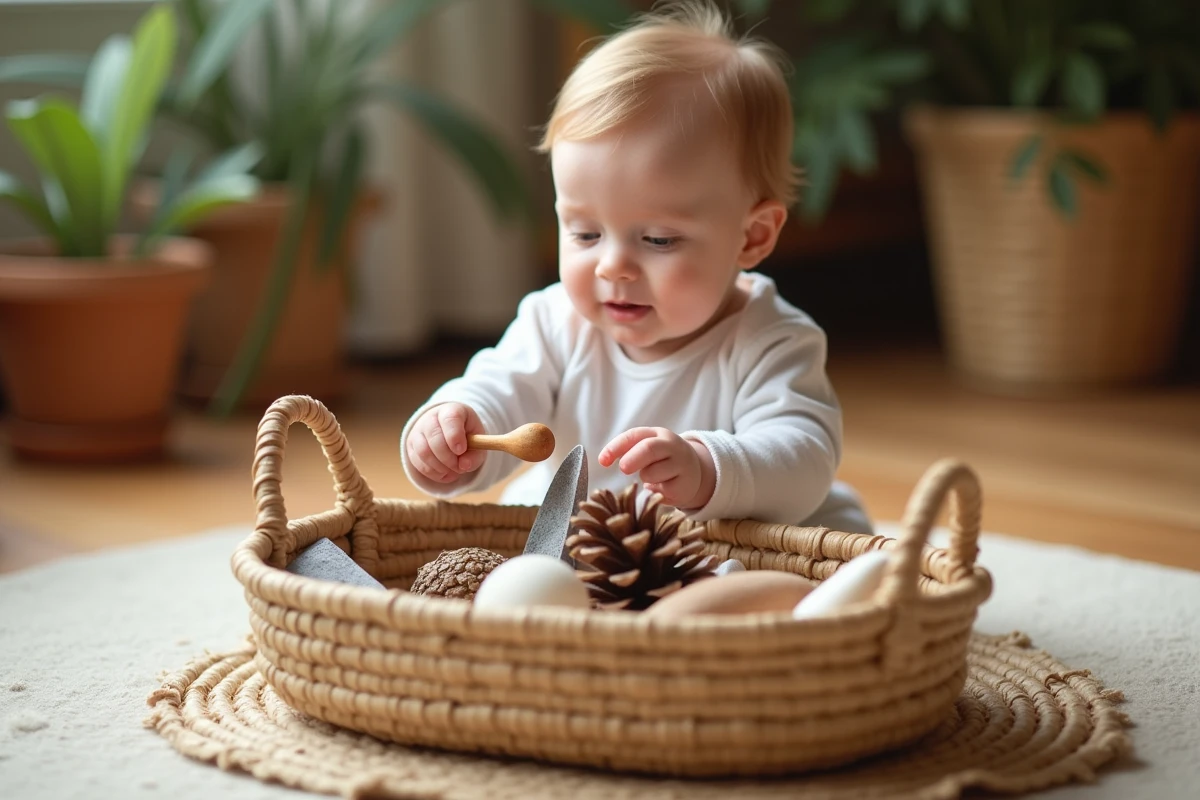
A basket containing everyday objects with different textures, weights, and temperatures (wooden spoon, crumpled fabric, natural sponge, small smooth pebble) constitutes an autonomous sensory activity. The baby explores through touch, mouthing, and free manipulation.
The interest lies in the diversity of materials rather than quantity. We observe that a basket of six to eight objects is sufficient to maintain active exploration without causing overload. Renewing one or two objects each week reignites curiosity.
4. Shared reading of board books
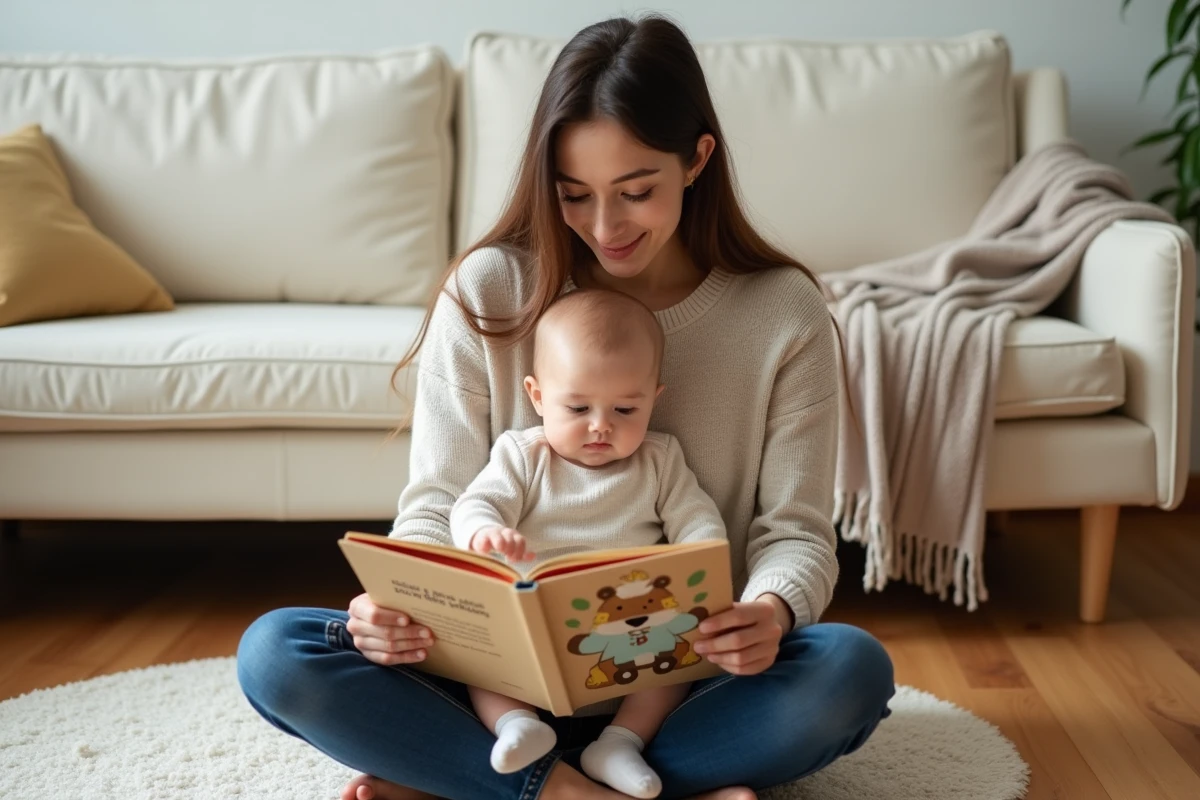
A UNICEF report published in 2022 identifies shared reading as a priority activity from 6-12 months, with measurable effects on receptive language and joint attention. At 8 months, the baby does not decode words but follows the pointing finger, associates an image with a sound, and participates in the rhythm of the narration.
Board books with one image per page, contrasting, with realistic representations (fruits, animals, faces) are more effective than overloaded books. The gesture of turning thick pages also works on fine motor skills of the pincer grasp.
5. The structured peek-a-boo game

Pek-a-boo remains the most documented emotional development game at this age. It engages working memory (anticipating reappearance), regulates emotional response (controlled surprise), and strengthens the attachment bond.
To structure the game, varying the hiding supports provides an additional benefit:
- A light cloth placed over the baby’s head, for them to actively remove (voluntary motor skills)
- A rigid cardboard in front of the parent’s face, with variation in the tempo of reappearance
- An object hidden under an overturned bowl, to be discovered by the baby (transition to active searching)
6. The stackable nesting cups
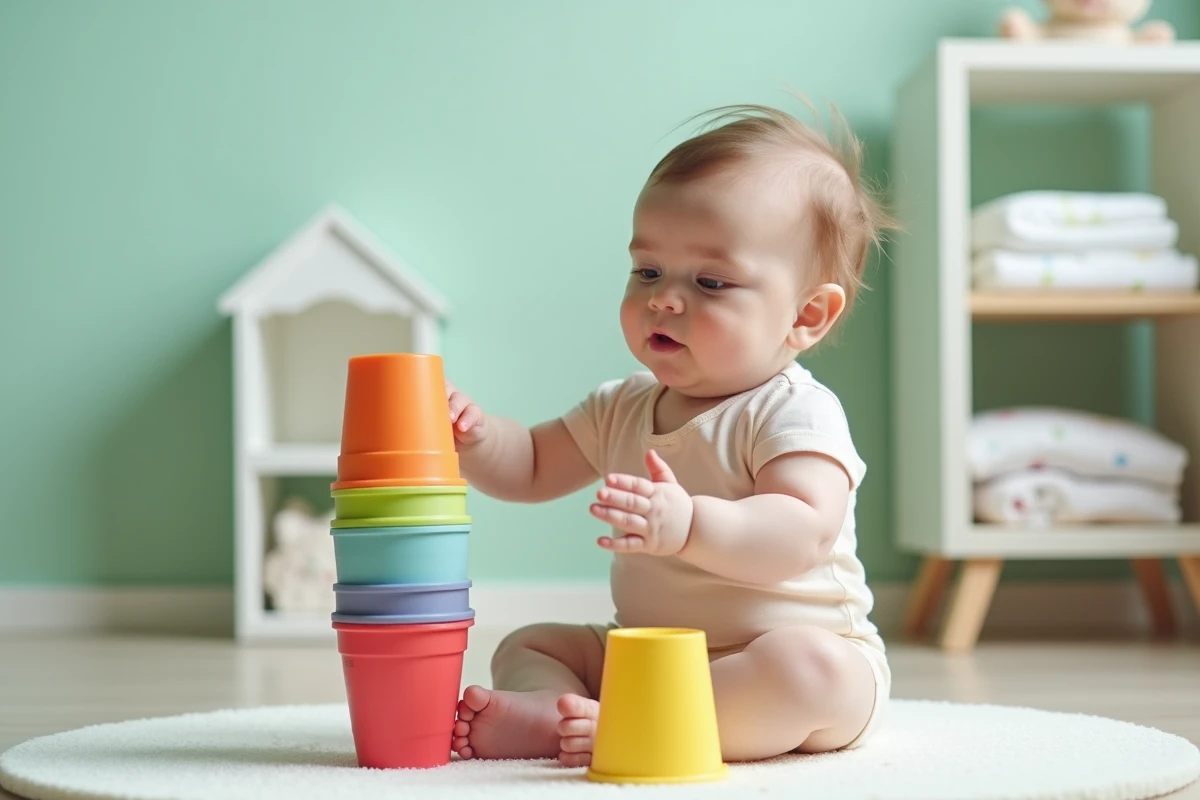
The nesting cups engage bimanual coordination and the concept of relative size. At 8 months, the baby does not build a tower but fits them together, taps the cups against each other, and knocks them over. These actions are prerequisites for sorting and seriation.
Choosing a set of cups without toxic paint, made from recycled plastic or bio-sourced material, remains a basic precaution since they will inevitably end up in the mouth.
7. The tambourine and self-produced sounds
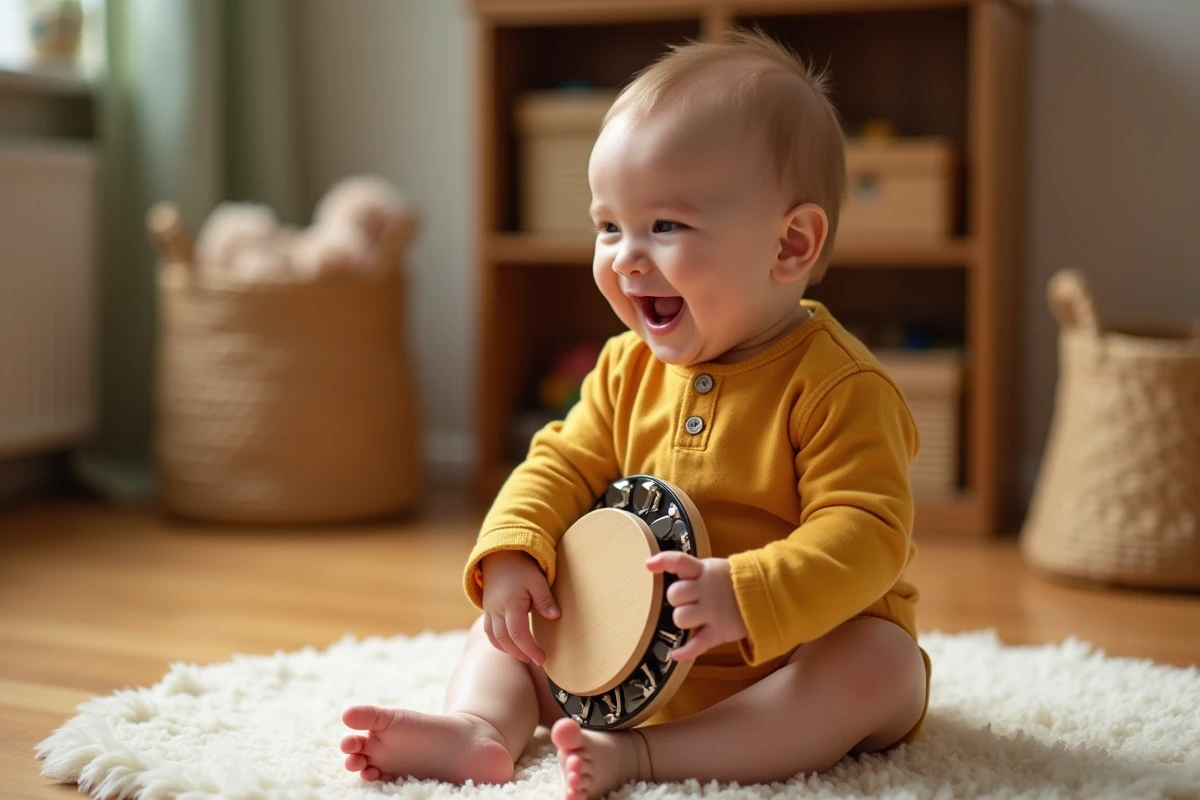
Producing a sound through a voluntary gesture (hitting a tambourine, shaking a rattle with bells, tapping two notes on a xylophone) develops the cause-and-effect relationship of sound. The baby understands that their action modifies the environment, which reinforces the sense of agency.
Wooden instruments with a soft sound are preferable to electronic toys with pre-recorded sounds. The fundamental difference: the baby controls the intensity and rhythm with an acoustic instrument, whereas a button always triggers the same sequence.
8. The push-pull game with a rolling object
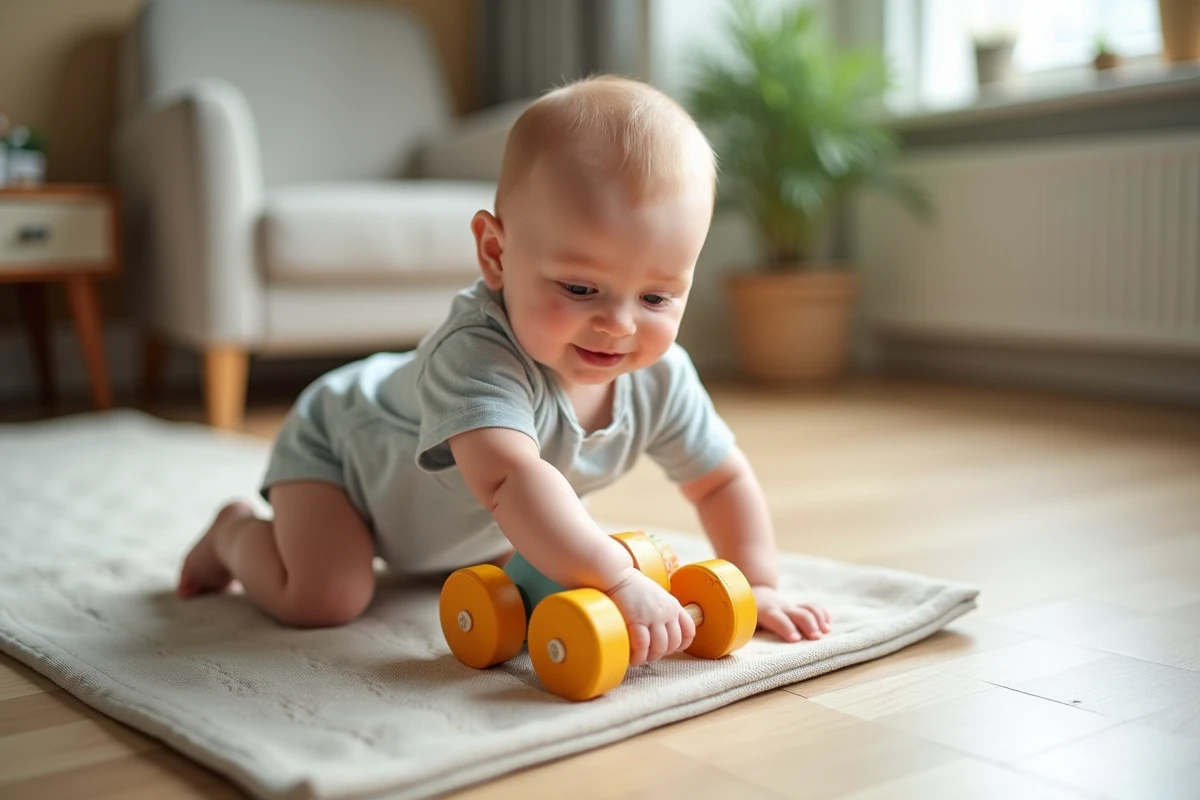
Pushing a cylinder or pulling a string toy engages the ground supports and prepares for verticalization. This type of motor play directly aligns with WHO recommendations on physical activity for children under five.
The ideal rolling toy at 8 months is stable, heavy enough not to flee at the slightest contact, and light enough to be moved from a sitting or crawling position. A small diameter raw wooden cylinder meets these criteria better than most commercial wheeled toys.
9. The unbreakable mirror on the floor
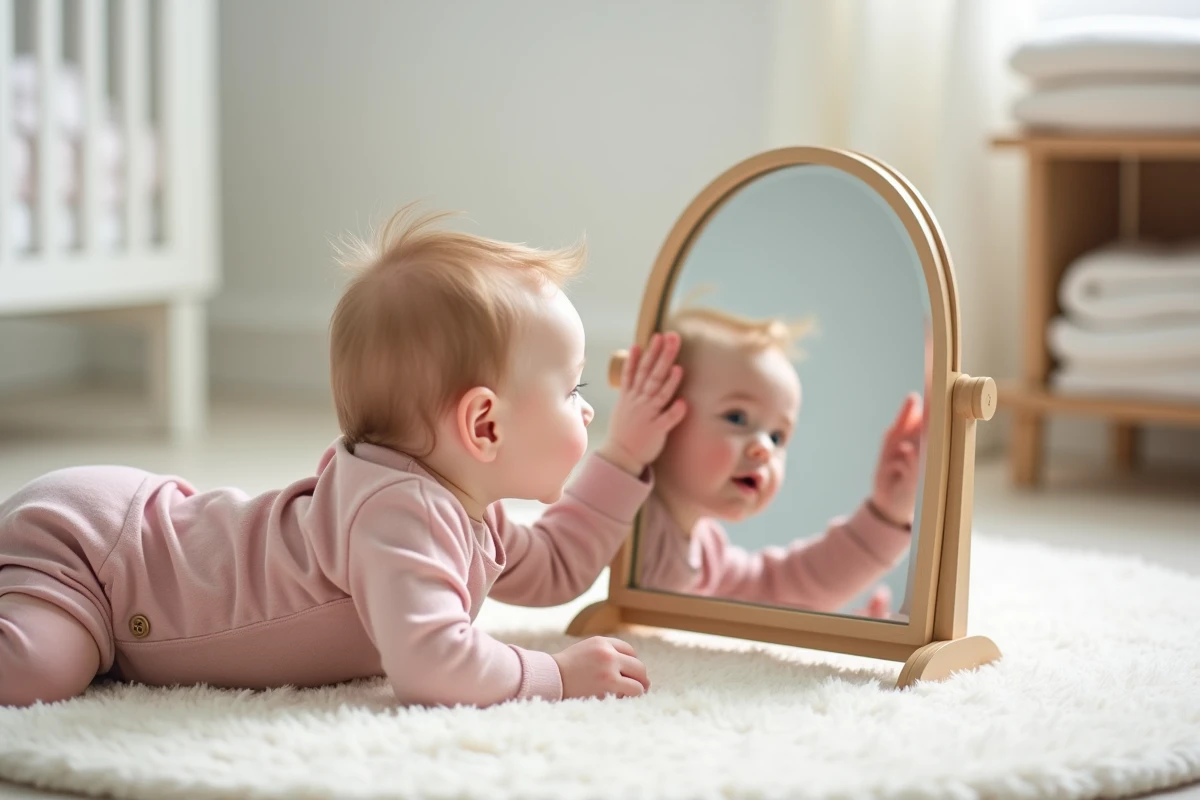
The unbreakable mirror placed at the baby’s height provokes social interactions with their own reflection: smiles, vocalizations, gestures of approach. At 8 months, self-recognition is not yet acquired, but the visual exploration of the reflection stimulates joint attention and babbling.
Placing the mirror during tummy time adds an extra motivation to lift the head and shoulders, thus combining sensory awakening and postural reinforcement.
10. The water or seed transfer bin
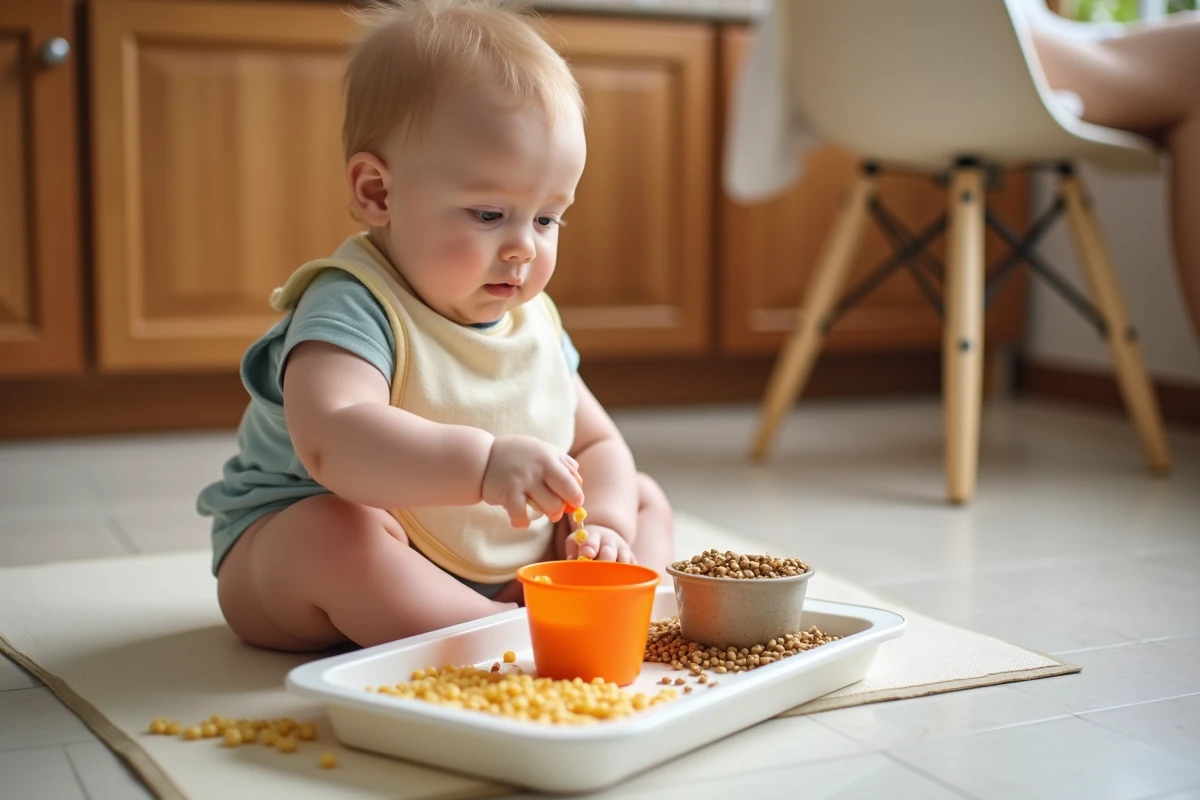
Transferring (pouring water, moving large seeds like dry beans from one bowl to another) develops fine motor skills, bimanual coordination, and volume perception. The tactile sensory component (warm water, smooth seeds) enriches the experience.
The precautions to take for this activity:
- Seeds large enough to eliminate the risk of ingestion and choking
- Constant supervision, without exception, during the entire duration of play with water
- Shallow and stable bin placed on a non-slip surface to prevent tipping
Transferring is one of the few activities that combines motor, sensory, and cognitive stimulation in a single gesture. It also prepares for the gestures of autonomous eating that will develop in the following months.